Answer:
- Control-M/Server will set the completion status of the Control-M job upon execution based on the EXIT CODE provide bu the executed task.
- The exit code from a batch job is a standard UNIX termination status
- The exit code can be displayed in a shell script by checking the "$?" variable after executing a command.
- Typically, exit code 0 (zero) means successful completion.
- Codes 1-127 are typically generated by your job itself calling exit() with a non-zero value to terminate itself and indicate an error
- Exit codes in the range 129-255 represent jobs terminated by Unix "signals". Each type of signal has a number and the job exit code reported is the signal number plus 128. Signals can arise from within the process itself (as for SEGV, see below) or be sent to the process by the OS.
- The following table for UNIX Signal is provided as a reference only:
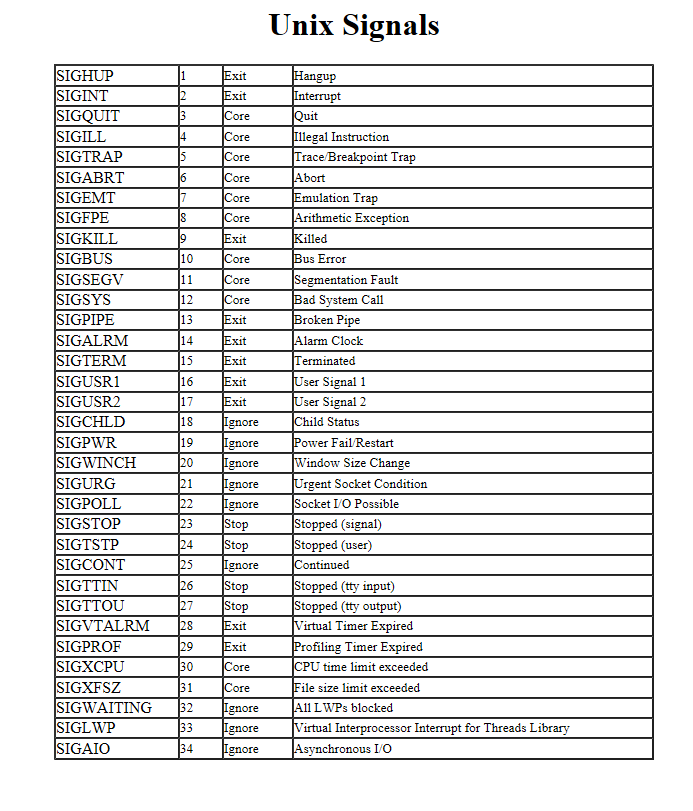
Additional Information:- Control-M Job failed and ended NOTOK because it is terminated by UNIX "Signal"
- Following example is where a Control-M Job terminated with a exit code of 129:
Error:
08/02/2013 13:12:42 TR5100 ENDED AT 20130208131242. OSCOMPSTAT 129. RUNCNT 1
Exit Code = 129 = 128 + 1
Signal Number = 1
Signal Number 1 means SIGHUP (Hang Up)
Legacy ID:KA389025